
Frequently Asked Questions
1. How do solar panels actually work?
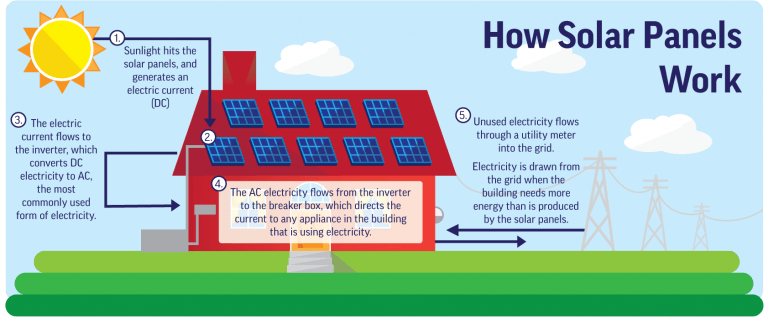
Solar panels are made of highly excitable, conductive materials. When the sun’s rays hit the solar panels, the reaction creates direct current (DC) electricity. Since most homes and businesses use alternating current (AC) electricity, your solar-generated DC energy will pass through an inverter to become AC electricity. Then it flows through your property’s wiring and behaves just like the power you’ve been using your whole life.
2. Is solar energy reliable enough for my home or business?
The only time your solar panels stop generating electricity is when the sun’s not out. That means at night and during eclipses. The sun is constant. It rises and sets pretty routinely. It’s more predictable and reliable than power plants, which often experience outages several thousand times every year
3. Do solar panels only work in sunny areas like Brisbane?
Your solar panels don’t need sunshine, per se, to generate electricity as much as they need direct, unobstructed access to the sun’s UV rays. Similar to how your skin still tans when it’s overcast outside, your solar panels will still generate electricity during cloudy, rainy, or snowy days. Germany now gets 85% of their energy from renewables including solar power.
4. How much will I really save on my electricity bills?
That depends on how much electricity your home or business uses, where you live, the rate your utility company charges for electricity, and several other factors. Most solar providers aim to offset 70–100% of your electricity bill,
5. How will switching to solar energy help me budget better?
Right now you don’t have any control over the electricity rate your utility company charges. And trends show that electricity rates will continue to rise. When you install solar panels on your property, you’ll be generating more electricity than you use from the utility company at the price of free. Then you’ll also generate more than enough to sell back to the utility company as credits to further lower your bills. No more surprise electricity bills.
6. How soon will I notice a difference in my electricity bills?
Your solar panels will start generating usable energy for your property the day they’re installed. Depending on when you receive your electric bill, you could start noticing lower bills the very first month.
7. Are solar panels difficult to maintain?
Solar panels are easier to maintain than your property’s and maybe even your cell phone. That’s because solar panels have zero moving parts to break. The most you’ll have to do to maintain your solar panels is make sure they’re free of dust, pollen, leaves, and other debris
8. Will I ever need to replace my solar panels?
Reputable solar providers now offer solar panels with manufacturer’s warranties that last between 10–15 years. Since solar panels are so easy to maintain and have zero moving parts, they’ll keep generating energy for you home long enough to see a sizable return on your investment. Newer models have expected lifespans of 25+ years.
9. Will installing solar panels damage my roof?
If anything, solar panels will protect your roof from damage and may even keep your home cooler. Check out all the different solar mounting options you can choose from. Each method aims to do as little damage to your roof as possible.
10. How long do solar panels take to install?
Installing your solar panels may take four hours to a whole day, depending on the size of your solar system and your property. Your solar install will not have to rewire your house as all the wiring stays exactly the same. Your new solar system will consist of a few additional parts to your existing electricity system: your solar panels, the inverter.
11. Will solar panels raise my home or business property value?
Everyone loves saving money, studies have discovered that for every $1,000 you save in electricity costs thanks to a solar panel every year, you gain up to $20,000 in property value
12. How does solar energy benefit the environment?
Solar power is a renewable resource, which means there’s so much of it freely available we never have to dig for coal or refine other toxic energy sources just to keep the lights on. Solar energy reduces your carbon footprint by decreasing greenhouse gas emissions (which contribute to climate change). Since it doesn’t produce any pollution, it also means we’ll have less harmful pollutants in our air, land, and water.